Customer Testimonial Videos: Questions and Preparation
A testimonial records a real customer describing their experience in their own words.
A testimonial records a real customer describing their experience in their own words. Prepare open questions, a quiet location and clear permission to use the recording.

What Can a Customer Testimonial Explain?
- Social proof: Viewers see someone like themselves saying "this worked."
- Authenticity: A real face and voice are harder to fake than text reviews.
- Story: Humans are wired to remember stories, not features.
- Emotion: Voice and body language add context to the account.
The 5-part testimonial story framework
Every great testimonial answers these five questions, in roughly this order:
- Who are you? (1 sentence — name, role, company)
- What problem were you facing? (be specific, concrete, measurable if possible)
- Why did you choose us? (what other options did you consider)
- What was the experience like? (honest — include small challenges)
- What's different now? (the transformation, with a verified example or result)

Don't write the script — write questions
Prepare open questions and let the customer answer in their own words. Build the edit from what was actually said.
Put the interviewer off-camera
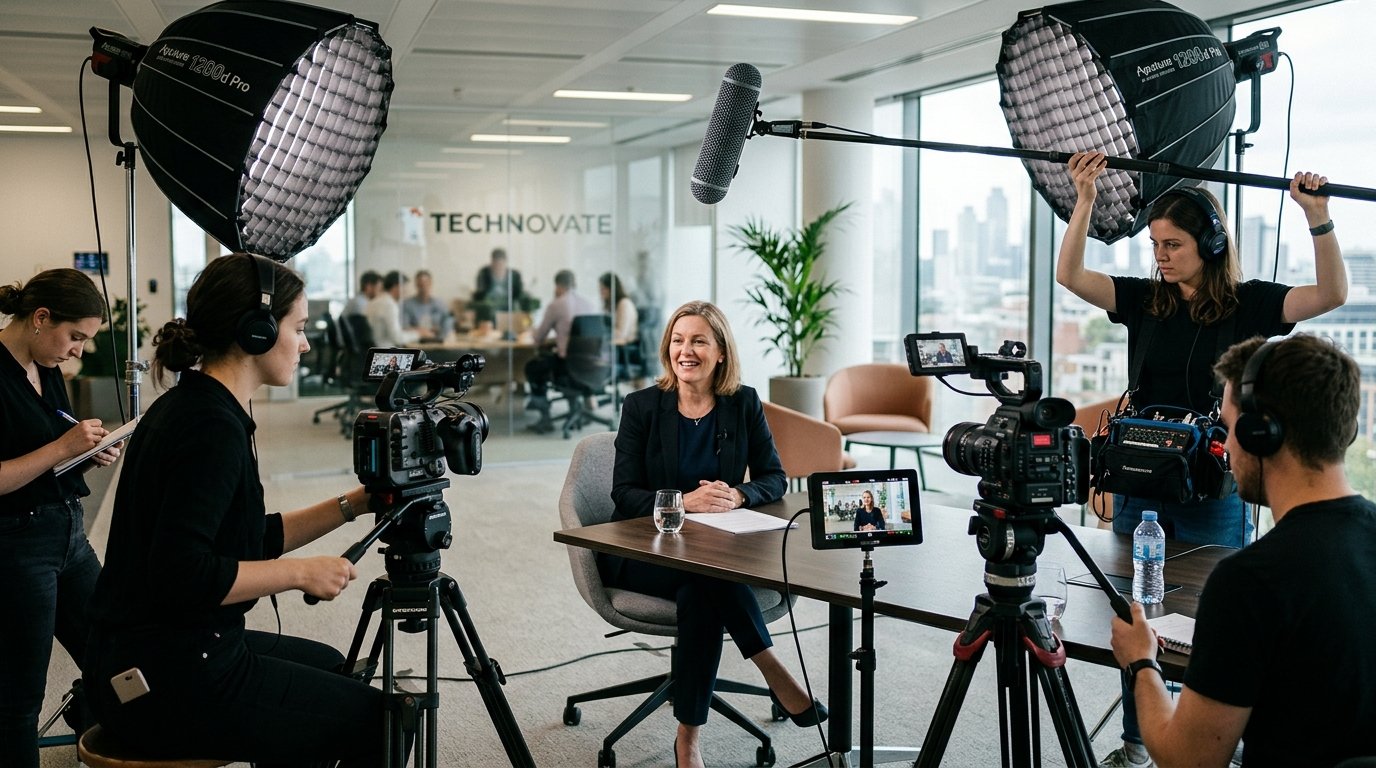
The subject talks to a real human sitting next to the camera, not to the lens. This creates natural eye lines, warmth, and real reactions.
Start with warm-up questions
Allow time for the speaker to settle in before the main questions. Keep useful answers when editing.

Ask for specifics, not superlatives
Bad: "How was working with us?" → "It was great!"
Good: "Tell me about the day you realized it was working." → a real story with sensory detail.
Shoot B-roll of real work, real environment
Cutaways to the customer using your product, their team, their office, their results make the story tangible. B-roll is usually more persuasive than the talking head itself.
Lighting
- Soft key light, 45° from the subject
- Fill light or bounce to lift shadows
- Gentle backlight for depth
- Shoot in a space with character, not a blank wall
Audio
- Lavalier mic for primary audio
- Boom mic as backup
- Test for HVAC noise, traffic, fluorescent hum before rolling
- Record 30 seconds of room tone for editing
Framing
- Medium close-up (mid-chest to top of head)
- Eyes on upper third of the frame
- Subject slightly off-center, looking into the negative space
- Shallow depth of field to separate subject from background
Testimonial video types: which one fits your goal?
TypeLengthUse case Social cut15–30sPaid ads, social proof Standard testimonial60–90sWebsite homepage Case study film2–4 minSales enablement, B2B Mini-documentary5–10 minBrand storytelling, conferencesCommon testimonial mistakes
- Avoid asking the customer to read prepared praise; ask about actual experience and examples.
- Generic praise. "They were great!" says nothing. Specifics sell.
- No B-roll. Just a talking head is boring.
- Skipping the release form. Always get written permission to use the footage.
FAQ
Q: How do I convince customers to appear on camera?
Offer a short commitment (60–90 min), a professional experience, and copies of the final video for them to share. Many customers enjoy the spotlight and the personal PR.
Q: Should I offer payment? Agree on participation, any compensation and usage rights before filming. Keep the account true to the customer’s experience; do not require praise in return for support.
Q: How much does a testimonial video cost? Request a quote based on shoot days, crew, locations, post-production, deliverables and usage rights. Confirm what is included before booking.
Plan a Customer Interview
Share your goal, schedule and required deliverables to discuss a production plan. Contact 9,6Hz Agency portfolio